Passive House Windows Australia — Technical Guide 2026
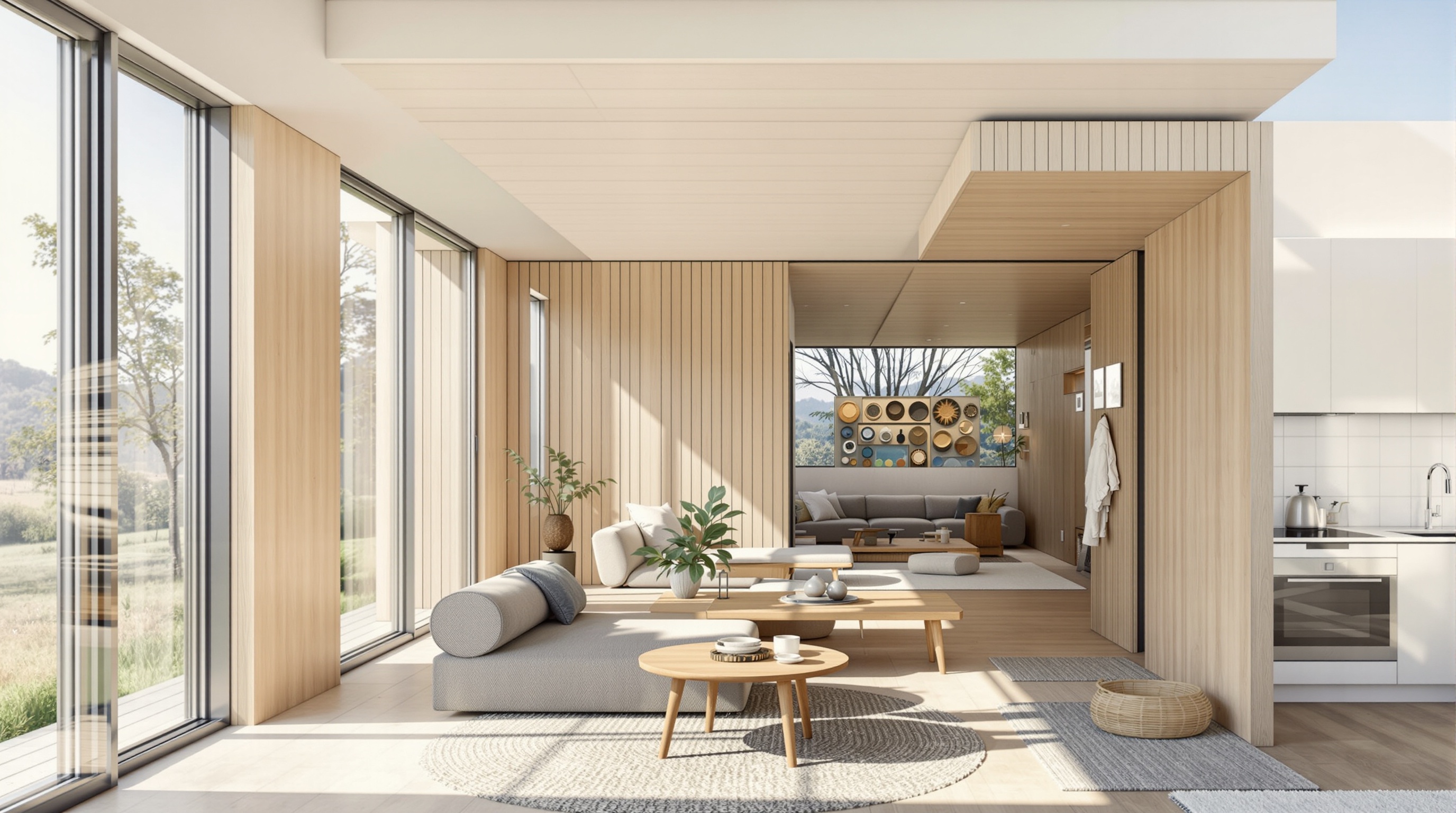
This technical guide is written for architects, builders, and developers specifying Passive House windows Australia. We cover the 0.9 U-Value standard, triple glazing configurations, SHGC requirements for Australian climate zones, frame specifications, hardware standards, and how window selection directly impacts NatHERS 7-star ratings. All specifications reference Finesse Windows' certified Passive House systems installed across Melbourne, Canberra, and Tasmania.
What Is a Passive House Window?
A Passive House window is not simply a high-performance window. It is a component certified to meet the stringent thermal and airtightness standards set by the Passive House Institute (PHI) in Darmstadt, Germany. In Australia, where the National Construction Code (NCC) now requires new homes to achieve a minimum 7-star NatHERS rating, Passive House-certified windows have become the specification of choice for architects and builders targeting 8-10 star performance.
The core principle is simple: windows are the weakest thermal link in any building envelope. Standard Australian windows achieve U-values of 2.5-4.0 W/m²K — meaning they leak heat at a rate that makes achieving energy efficiency targets nearly impossible. A Passive House window achieves U-values ≤0.9 W/m²K, effectively turning the window from an energy liability into a near-neutral thermal element.
Passive House Window Requirements (PHI Standard)
- •U-value (whole window): ≤0.80 W/m²K (certified), ≤0.90 W/m²K (certified component)
- •Air infiltration: ≤0.6 ACH50 (building standard), Class A4 (window standard)
- •Thermal bridges: Ψ-value ≤0.05 W/mK at frame/glass junction
- •Installation: Airtight connection to wall structure required
The 0.9 U-Value Standard Explained
The U-value (thermal transmittance) measures how much heat passes through a window per square metre, per degree of temperature difference, measured in Watts per square metre Kelvin (W/m²K). Lower is better. A U-value of 0.9 means only 0.9 watts of heat escapes through every square metre of window for every 1°C temperature difference between inside and outside.
| Window Type | Typical U-Value | Relative Performance | Suitability for Passive House |
|---|---|---|---|
| Single Glazed | 5.0 – 6.0 W/m²K | Baseline (poor) | Not suitable |
| Standard Double Glazed | 2.5 – 3.5 W/m²K | 2x better than single | Not suitable |
| High-Performance Double Glazed | 1.2 – 1.6 W/m²K | 4x better than single | Marginal |
| Standard Triple Glazed | 1.0 – 1.2 W/m²K | 5x better than single | Close but not certified |
| Finesse Passive House Triple Glazed | 0.9 W/m²K | 6x better than single | PHI Certified |
Achieving 0.9 W/m²K requires more than simply adding a third pane of glass. It demands precise engineering of every component: glass thickness, cavity width, gas fill, Low-E coating placement, frame depth, thermal breaks, spacer bar technology, and installation methodology. Finesse Windows' 0.9 U-Value system is the only Passive House certified uPVC window system manufactured for Australian conditions.
Triple Glazing Configuration for Australian Passive House
The Finesse Windows Passive House triple glazing specification uses a 6/16/6/16/6 configuration: two 16mm argon-filled cavities separated by three 6mm panes of low-iron glass. This is the optimal balance for Australian conditions — providing maximum thermal resistance without excessive weight or thickness that would compromise frame performance.
Finesse Triple Glazing Specification
Glass Configuration
4mm / 16mm / 4mm / 16mm / 4mm
Gas Fill
Argon (90% fill rate)
Low-E Coating
Position 3 (surface 5 in triple)
Spacer Bar
Warm-edge TGI spacer
Total Unit Thickness
50mm
Glass Type
Low-iron, toughened where required
Argon gas fill is critical. Argon is denser than air and reduces convective heat transfer between glass panes by approximately 30% compared to air-filled cavities. The 16mm cavity width is optimised for argon — narrower cavities reduce gas effectiveness, while wider cavities trigger convection currents that undermine insulation.
Low-E coating placement in triple glazing is nuanced. For Australian climates, the primary Low-E coating is applied to surface 5 (the inner face of the middle pane). This position reflects long-wave infrared radiation back into the building in winter while allowing short-wave solar gain to enter. A secondary coating on surface 2 provides additional summer heat reflection. This dual-coating approach is essential for managing Australia's high solar exposure.
SHGC — Solar Heat Gain Coefficient for Australian Climate
While U-value measures heat loss, SHGC (Solar Heat Gain Coefficient) measures heat gain — specifically, how much solar radiation passes through the window and enters the building as heat. SHGC is expressed as a decimal between 0 and 1. For Passive House design in Australia, SHGC selection is climate-specific and directly impacts cooling load calculations.
| Climate Zone | Cities | Optimal SHGC | Rationale |
|---|---|---|---|
| Cool Temperate | Melbourne, Geelong | 0.30 – 0.40 | Balance winter gain vs summer cooling |
| Inland Cool | Canberra, Ballarat | 0.40 – 0.50 | Higher winter gain priority, cold winters |
| Cold Maritime | Tasmania (Hobart, Launceston) | 0.45 – 0.55 | Maximise solar gain, minimal cooling risk |
| Hot Humid | Brisbane, Sydney | 0.20 – 0.30 | Minimise solar gain, cooling dominant |
| Hot Dry | Adelaide, Perth | 0.25 – 0.35 | Low SHGC essential, extreme summer heat |
For Melbourne Passive House projects, Finesse Windows specifies SHGC 0.35 as standard — providing sufficient winter solar gain to offset heating demand while preventing summer overheating. For north-facing glazing in Melbourne, we often specify SHGC 0.45 to maximise passive solar heating, paired with external shading devices to control summer gain. East and west-facing windows typically use SHGC 0.25-0.30 to minimise low-angle summer sun penetration.
Frame Specification — Why 80mm Depth Matters
The frame is not merely a holder for glass — it is a critical thermal component. Standard Australian window frames are 60-70mm deep, designed for single or double glazing. A 50mm triple glazed unit cannot be properly accommodated in a 60mm frame without compromising structural integrity, hardware function, or thermal performance.
Finesse Passive House Frame Specification
Frame Depth
80mm
Accommodates 50mm triple glazing + hardware
Chamber Count
6 Chambers
Maximises thermal break within profile
Reinforcement
Galvanised Steel
Structural integrity without thermal bridging
The 80mm depth provides three critical advantages. First, it allows the 50mm triple glazed unit to sit deep within the frame, protecting the edge seal from UV exposure and thermal stress. Second, it creates space for multiple internal chambers — air pockets that act as insulation barriers within the frame itself. Third, it accommodates the larger hardware mechanisms required for triple glazing, including multi-point locking systems and compression seals.
Our uPVC profiles use 6 internal chambers separated by thin webs. Each chamber traps air, creating a series of thermal breaks that prevent heat from travelling through the frame. The outer chambers are smaller to minimise thermal bridging at the exterior surface, while inner chambers are larger to maximise insulation at the interior surface. This chamber geometry is computer-optimised for Australian temperature ranges.
Siegenia TITAN AF Hardware Standard
Hardware is the most overlooked component in window specification — yet it directly determines airtightness, security, and long-term functionality. Finesse Windows specifies Siegenia TITAN AF as standard on all Passive House installations. This is not a preference; it is a requirement for achieving the air infiltration rates that Passive House demands.
Siegenia TITAN AF Technical Specification
- •Multi-point locking: 4-6 locking points per sash, creating continuous compression around the entire perimeter
- •Active compression seal: Cam-driven mechanism pulls sash firmly against frame seal when handle is rotated
- •Cycle testing: 50,000+ open/close cycles without degradation (equivalent to 45 years of daily use)
- •Corrosion resistance: Stainless steel and zinc-nickel coated components for coastal environments
- •Security rating: RC2 (standard) and RC3 (optional) burglar resistance certification
The active compression mechanism is what separates Siegenia from standard hardware. When you close the window and turn the handle, the cam system actively pulls the sash inward against the frame seal — creating a uniform pressure that eliminates air gaps. This is how we achieve Class A4 air infiltration (≤0.3 m³/m·h at 100Pa), the highest performance rating under EN 12207. Standard hardware without active compression cannot achieve this rating, regardless of how good the seal material is.
NatHERS 7-Star Rating — How Windows Affect Your Score
Since the NCC 2022 update, new Australian homes must achieve a minimum 7-star NatHERS rating. Windows are the single largest variable in this calculation — typically accounting for 25-40% of the total heating and cooling load. Specifying the wrong windows can drop a building from 8-star to 5-star performance, regardless of how well the walls and roof are insulated.
Window Impact on NatHERS Rating
Typical 200m² Melbourne home, 35m² window area
Single Glazed Aluminium
4.2 ★
Fails NCC compliance
Double Glazed uPVC
6.8 ★
Marginal compliance
Triple Glazed Passive House
8.5 ★
Exceeds with margin
The NatHERS calculation engine (Chenath or AccuRate) models hourly heat flow through every building element over a full year. Windows are modelled with their U-value, SHGC, and orientation. A south-facing window with U-value 0.9 contributes almost nothing to summer cooling load, while a west-facing window with U-value 3.0 can add 2-3kW of cooling demand.
For architects and builders, this means window specification is the highest-leverage decision for achieving 7-star compliance. Upgrading from double to triple glazing typically adds 1.5-2.5 stars to the rating — often the difference between passing and failing. Finesse Windows provides Chenath/AccuRate-compatible window performance data for every project, ensuring your energy assessor has accurate inputs.
Why In-House Installation Is Critical for Passive House
A Passive House window is only as good as its installation. The world's best 0.9 U-Value window will fail if installed with gaps, thermal bridges, or improper sealing. This is why Finesse Windows uses in-house installation teams exclusively — no subcontractors, no third-party installers, no variance in quality.
Common Installation Failures
- ✗Gaps between frame and wall structure
- ✗Metal fixings creating thermal bridges
- ✗Inadequate or missing airtightness tape
- ✗Incorrect shimming causing frame distortion
- ✗Poor sealant application at frame/wall junction
Finesse Installation Protocol
- ✓Laser-levelled frame positioning
- ✓Thermally broken fixings only
- ✓Multi-layer airtightness tape system
- ✓Precision shimming with composite packers
- ✓Post-installation blower door testing
Every Finesse Windows Passive House installation includes a post-installation performance audit. We verify airtightness with smoke pencil testing, thermal imaging to detect thermal bridges, and operational testing of all hardware. This documentation is provided to the project energy assessor and building surveyor as evidence of compliance. Subcontractor installations cannot provide this level of accountability — which is why we do not use them.
Finesse Windows Passive House Technical Specification
Complete System Specification
Certification
Passive House Institute (PHI) Certified Component
U-Value (Whole Window)
0.9 W/m²K
U-Value (Frame)
1.2 W/m²K
U-Value (Glazing)
0.7 W/m²K
Air Infiltration
Class A4 (≤0.3 m³/m·h at 100Pa)
Acoustic Rating
Rw 45dB
Frame Material
uPVC, 80mm depth, 6 chambers
Glazing
6/16/6/16/6 triple, argon-filled
Hardware
Siegenia TITAN AF, multi-point
Seals
GreenteQ Active, EPDM triple seal
Spacer
TGI warm-edge, stainless steel
Warranty
10 years (profiles, hardware, glazing)
This specification is available as a downloadable PDF for project documentation. Finesse Windows provides Window Energy Rating Scheme (WERS) certificates, Passive House Institute component certificates, and NatHERS-compatible performance data for every project. Our technical team works directly with project energy assessors to ensure window inputs are correctly modelled in Chenath and AccuRate.
Request Technical Consultation for Your Project
Our technical team works with architects, builders, and developers on Passive House and high-performance projects across Melbourne, Canberra, and Tasmania. We provide specification support, energy modelling data, and certified installation.
Technical specifications, WERS certificates, and PHI component documentation available on request.
Related Technical Resources
Keywords: Passive House windows Australia0.9 U-Value windowstriple glazed Passive House windowsNatHERS 7 star windowsenergy efficient windows Australia